
The all-new Audi RS5 Avant is set to arrive in Australia later this year. The addition of the plug-in hybrid system pushes its weight up to 2,370 kg, making it 625 kg heavier than the previous generation RS4 Avant. It is even 270 kg heavier than the higher-spec RS6 Avant.
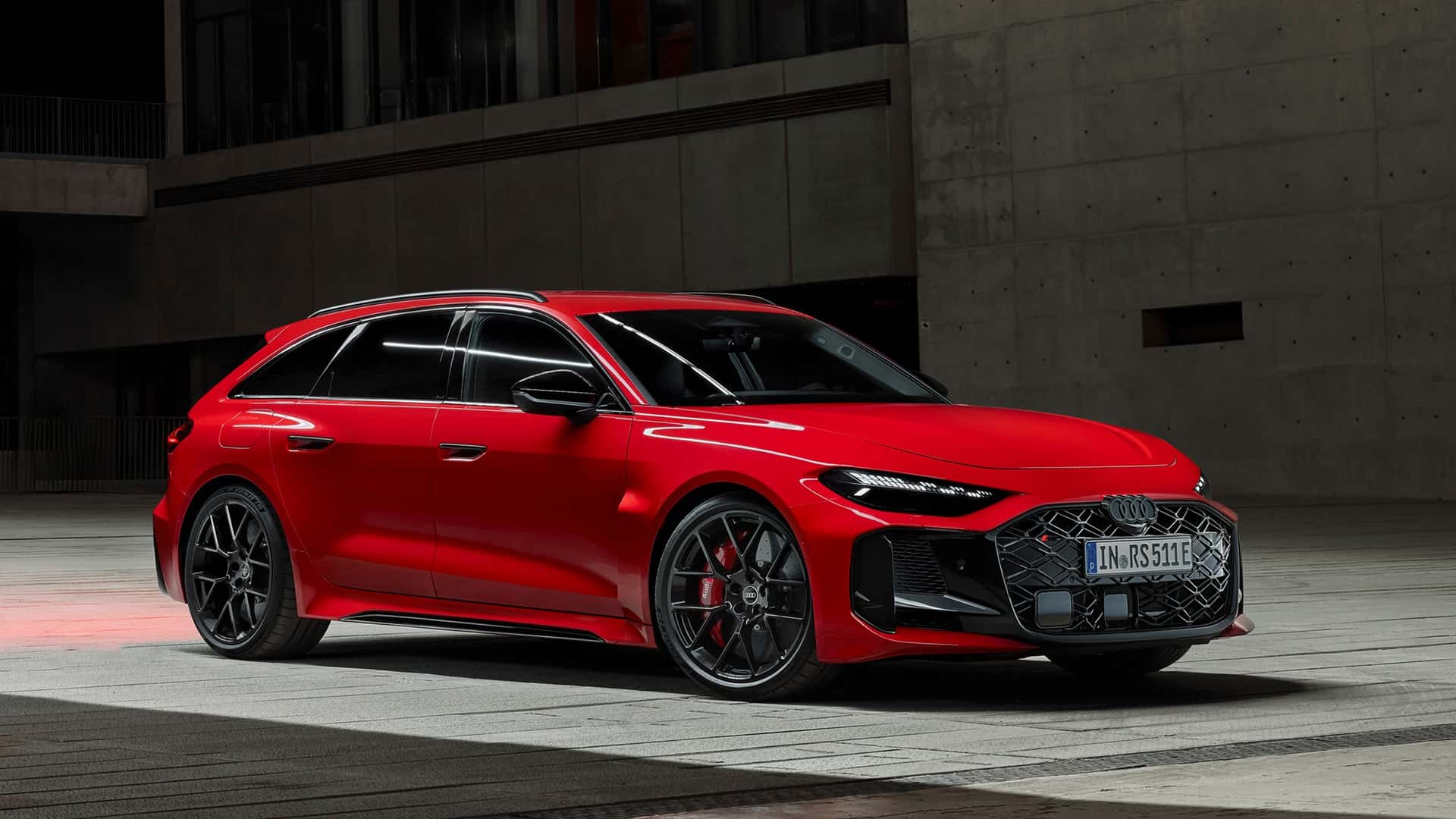
Audi RS5 Avant (source: Motor1.com)
This highlights the issue of excessive weight in electric vehicles (EVs), including both battery electric vehicles (BEVs) and plug-in hybrid electric vehicles (PHEVs). If the average weight of cars on the road increases as EVs become more prevalent, this will be very detrimental to road safety. People should take this issue seriously and seek appropriate ways to strike a balance between vehicle electrification and weight.
As major car manufacturers place a strong emphasis on long-range EVs, battery capacities are increasing, which will lead to a significant increase in vehicle weight. Transport & Environment (T&E) noted that BEVs weigh on average 23 per cent more than internal combustion engine vehicles, whilst PHEVs weigh 40 per cent more. A report from the International Council on Clean Transportation (ICCT) indicated that the average weight of new cars in the EU in 2023 had increased by 21 per cent compared with 2001. And the rise in sales of EVs being the main factor influencing average vehicle weight.
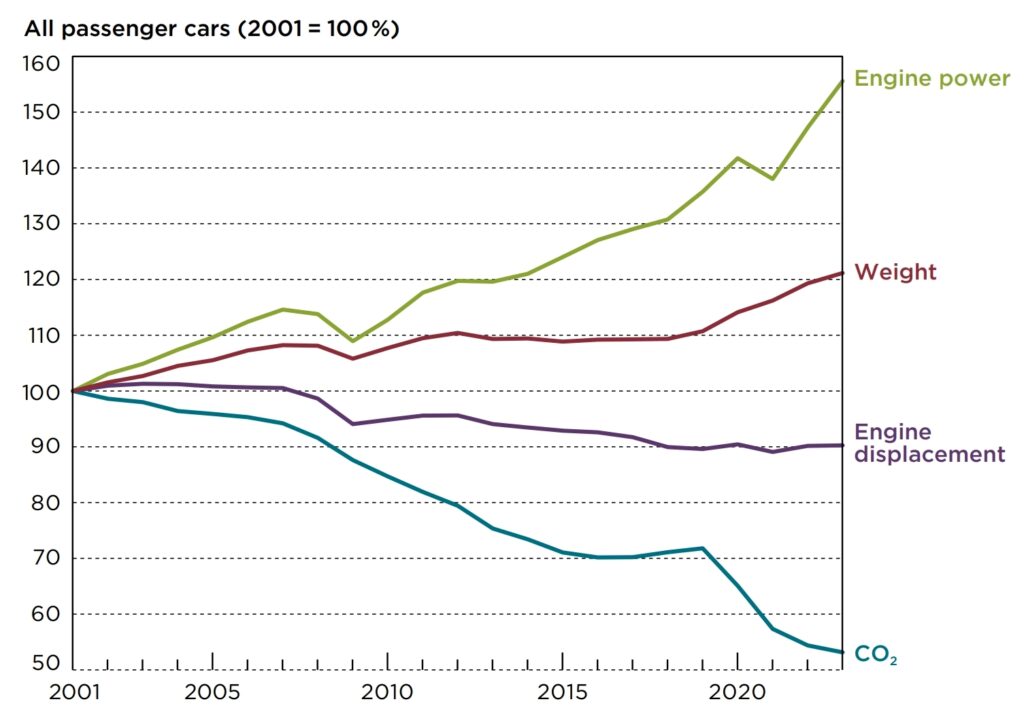
EU Passenger Car Trends, 2001-2023 (source: ICCT)
Excessive vehicle weight can endanger the safety of road users. According to the Insurance Institute for Highway Safety (IIHS), heavier vehicles better protect their own occupants in collisions, but at the expense of people in lighter vehicles. Additionally, the increase in weight may result in longer braking distances, which could pose a greater risk to pedestrians and cyclists in emergency situations. Moreover, electrification has generally boosted vehicle power, resulting in faster acceleration. The IIHS stated that vehicles with excessive power only encourage speeding, thereby leading to more fatal road accidents.
Excessive vehicle weight can also place an undue strain on roads and tyres. According to the fourth power law, the stress exerted by a vehicle on the road is proportional to the fourth power of its axle load. In other words, the increase in vehicle weight leads to an exponential increase in road wear and tear. Not only does this increase the cost of road maintenance, but damaged roads also seriously affect traffic flow and safety.
Furthermore, heavier vehicles experience tyre wear at a faster rate than lighter ones. It could have a negative impact on driving safety, making it easier for the vehicle to lose control. Meanwhile, the Organisation for Economic Co-operation and Development (OECD) noted that damage on roads, tyres and brake pads is a major source of non-exhaust emissions. As the batteries in EVs are relatively heavy, non-exhaust emissions from these sources may be higher than those from conventional vehicles. The organisation forecast that EVs would raise non-exhaust emissions by about 1.29 million tonnes by 2030, a 52.4 per cent increase.
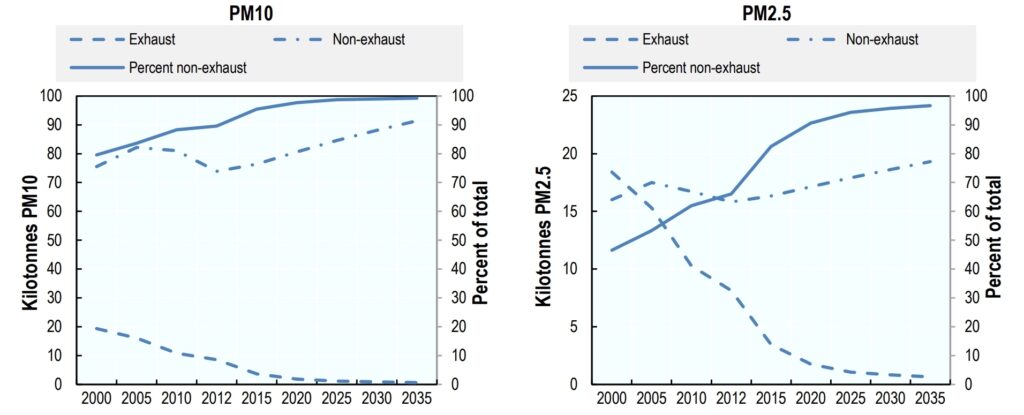
Exhaust and non-exhaust emissions of PM10 and PM2.5, California, 2000-2035 (source: OEDC
To address excessive EV weight, car manufacturers should use lighter materials and optimise vehicle design. But government action is also crucial. In Norway, all vehicles are taxed 12.5 Norwegian kroner (about 1.86 AUD) per kilogram above 500 kg, regardless of fuel type. In NSW, vehicle tax is also weight-based, but the charge differences are small and do not reflect the impact suggested by the fourth power law. Australia should follow Norway’s example in optimising vehicle taxation. Combined with the forthcoming road user charge, this can provide an effective response to the damage on public infrastructure caused by the weight of EVs.
Furthermore, the government should enhance the construction of public charging stations and increase the electricity grid capacity. When charging stations are as plentiful as petrol stations and charging takes as little time as refuelling, people’s range anxiety will decrease. Car manufacturers will also no longer simply increase battery capacity to extend the driving range. This will address the weight issue of EVs at its root.
The electrification of cars should continue, but rising vehicle weight should not be ignored. This not only relates to road safety but also has an impact on the environment. The government and car manufacturers should take steps to reduce the weight of EVs, ensuring their development moves in a more sensible and sustainable direction.




Great story, and I hope the electrical option prevails.