
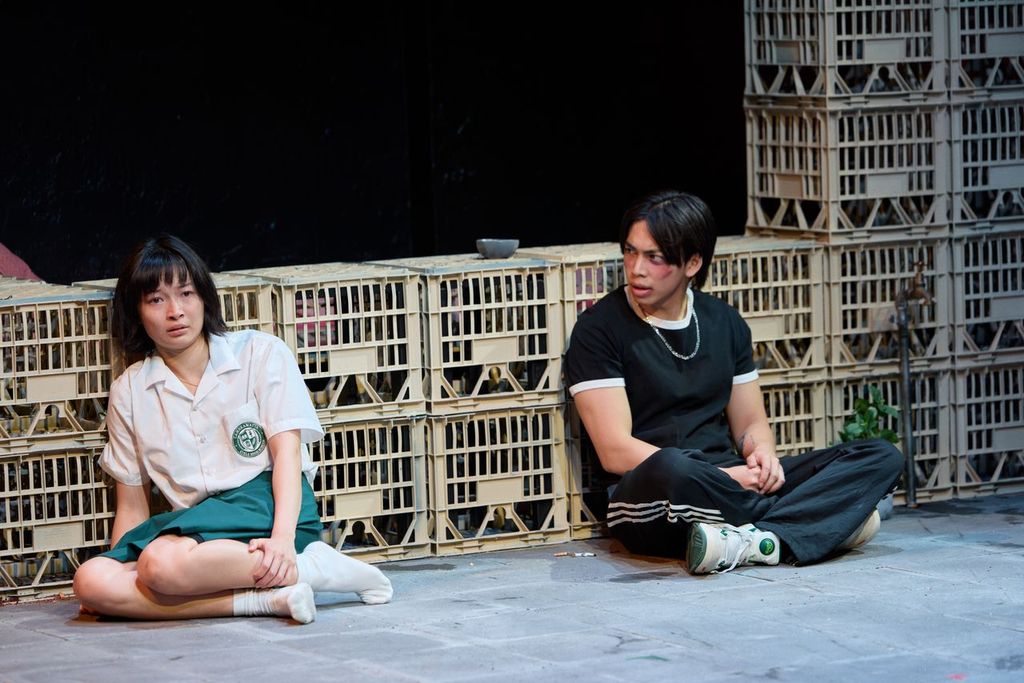
Sweet sixteens: Gemma Chua-Tran as Sonny and Kevin Khan as Vince. Photos: Daniel Boud
It’s refreshing to see a play enacted by an 10-strong cast, some new to the Belvoir stage, and one that focuses on a Vietnamese community. The Coconut Children is inspired by Vivian Pham’s bestselling 2020 novel and this is its debut as a play.
It’s Cabramatta in 1998 and Sonny Voung (Gemma Chua-Tran) opens the story with a short soliloquy referencing both painful memories of refugee boat journeys – she speaks of a small fishing boat crammed with 200 people, some dying – to this wide brown land, and her acknowledgment of the spiritual presence of her ancestors. The sound of the ocean crashing into her words adds to the atmosphere.
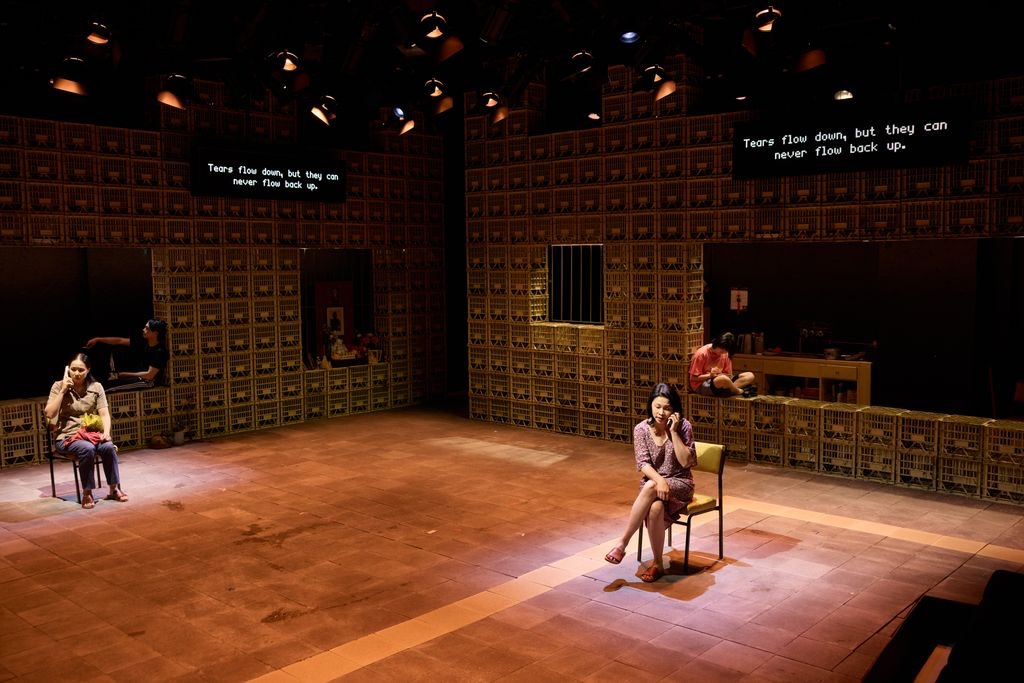
Then we are in her chaotic household, with her ever-exasperated mother Hu’o’ng (HaiHa Le) and her younger brother Oscar (Christy Tran), on a school day morning. The dialogue swaps from English to Vietnamese (with subtitles provided on Dale Ferguson’s cleverly designed set).
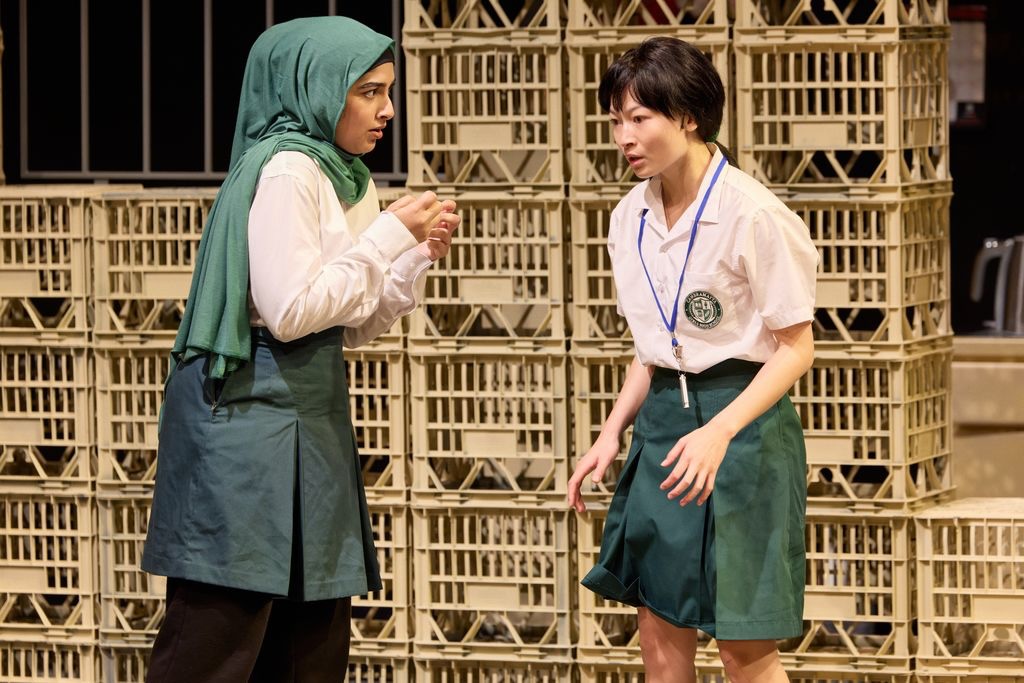
Sonny is capable, super smart (best in English at her school) and has the usual dreams and aspirations of many 16-year-olds, including a wish to look like the school’s Queen Bee. (Interesting to learn, from the program, that in 1987 Cabramatta High was the most diverse school in NSW, fewer than 10% of students had Australia-born parents.) Sonny’s a romantic at heart. Her best friend Najma (Rabia Majeed) is her sounding board – and so it is that we learn that Vince (Kevin Khan), who Sonny has known since they were both small, has just been released from juvie. Of course, goodie Sonny and bad boy Vince are not suited to each other at all (just like Romeo and Juliet would have lived longer without meeting) but we know this is going to be a love story of sorts. With all the attendant excruciating embarrassments and evasions of teenage attractions.
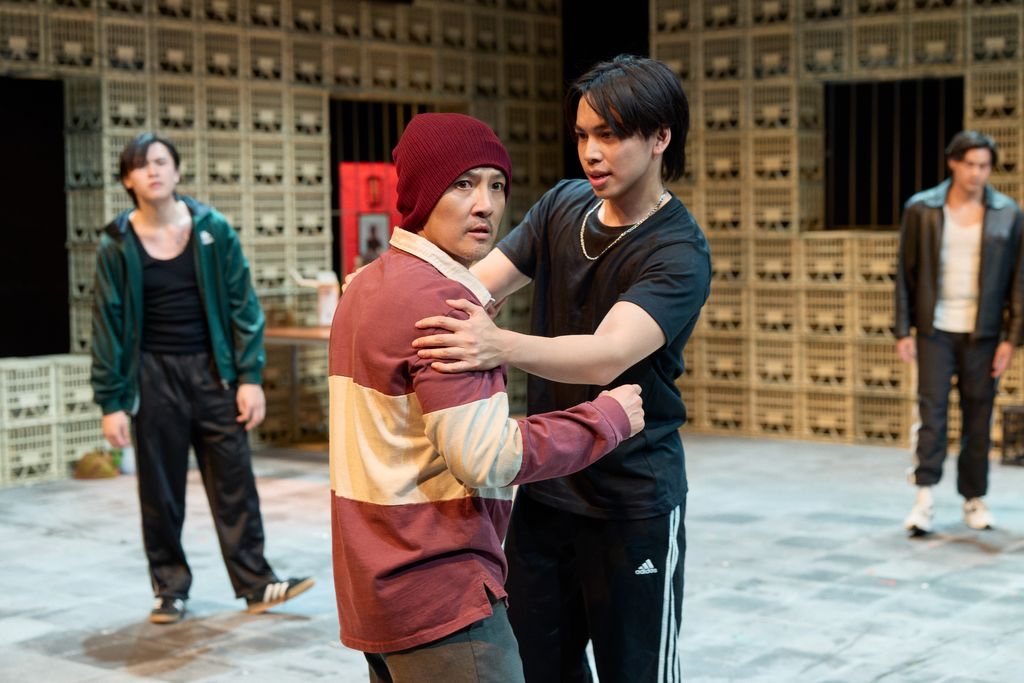
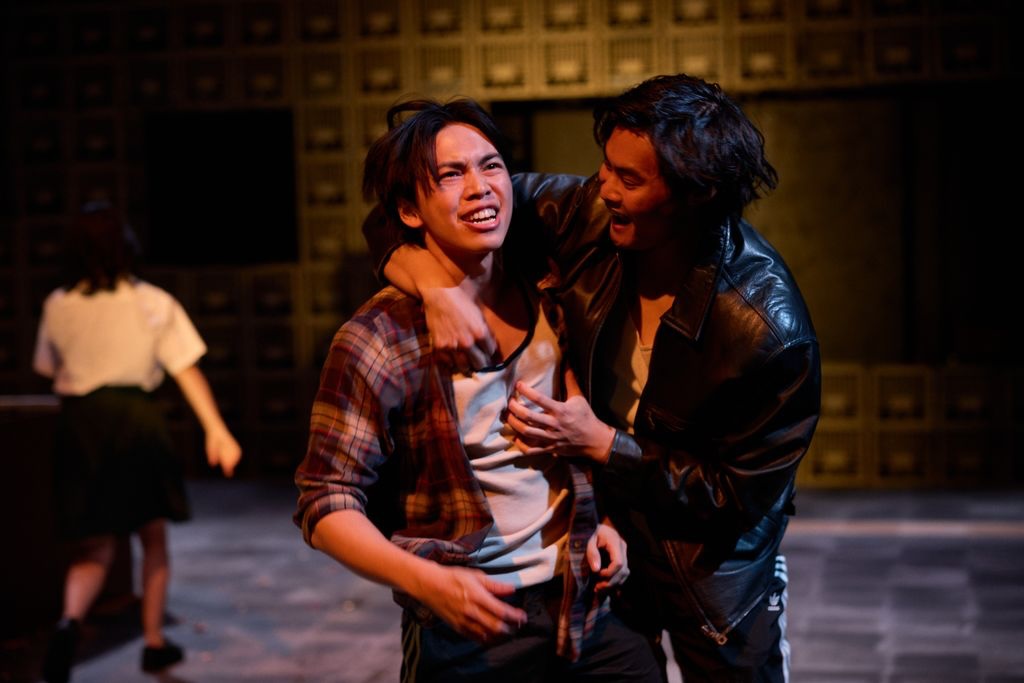
We meet Vince and his mates celebrating his release from juvie, and they are soon up to no good – setting fire to dumpsters, discussing drugs and deals, and so on. When challenged, Vince says he doesn’t care if he goes back to prison. He, his mates and their families are no strangers to crime and addiction. This and similar scenes with the boys are fast paced and full of action, so all credit to co-directors Hannah Goodwin and Catherine Văn-Davies. They convey the isolation and factionalism of young ‘new Australians’ trying to find their way and purpose in this new world, which is of course racist. (Again, from the program: in 1994, Cabramatta State MP and anti-drugs campaigner John Newman is assassinated.)
At the same time, Sonny’s put-upon mother is trying to ensure her kids do well in Australia (though she is deeply annoying even as we feel for her stunted personal ambitions). As well as contending with her children, Hu’o’ng has also to work around Grandma/Ba Ngoai (Vân Doàn), who loves nothing more than many tipples of rice wine and listening to the TV and radio at full volume. As noted earlier, it’s a chaotic household with many rules laid down by Hu’o’ng, while Sonny’s father Linh (Khanh Trieu) largely keeps his head down – although he will impart some gentle knowledge later in the piece. The trauma of a generation fleeing war and violence is embedded and continues to shadow and shape the generation that follows.
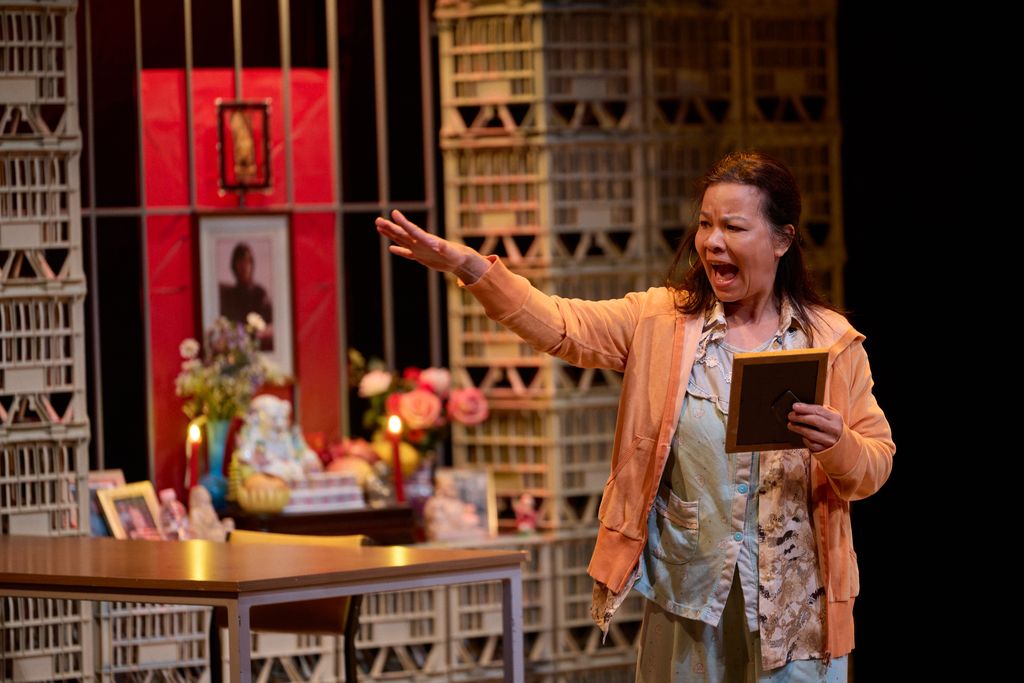
So, Sonny is tightly bound under virtual if well-meaning house arrest, and Vince is rebelling against the world in every which way. Both Chua-Tran and Khan are excellent in their roles, their body language – one repressed, but still hopeful; the other loose and athletic – mirroring their mindsets. Doán’s Grandma is also a standout, and not afraid to speak her mind.
Not having read the book, I cannot compare, but feel that nuances may have been lost in this adaptation (by the author herself, always tricky) from page to stage. There is humour for sure and some great lines (from ‘I reckon people in the next world could hear your Mum, no offence’ to ‘You need someone to talk to someone or you need someone chopped up?’, both delivered by Khan). There is a murky uncle, whose sexual assault of Sonny is barely alluded to, and if it was mentioned in the first act, I confess I missed it. There was a lot going on. But covered up by the family or not, it obviously would have affected Sonny in ways which are almost skimmed over here. There is a really interesting interaction between Hu’o’ng and Vince’s mother Hanh (nicely played by Susan Huang), which takes place over the phone despite the fact the pair are neighbours. It is rich in detail but it comes rather late in Act 2.
 As for the length of the play, at two hours and 40 minutes (with an interval), it could do with an edit – the first act especially, which began to feel a tad repetitive, whereas towards the end of the second act the resolution really speeds up – to what is an optimistic ending.
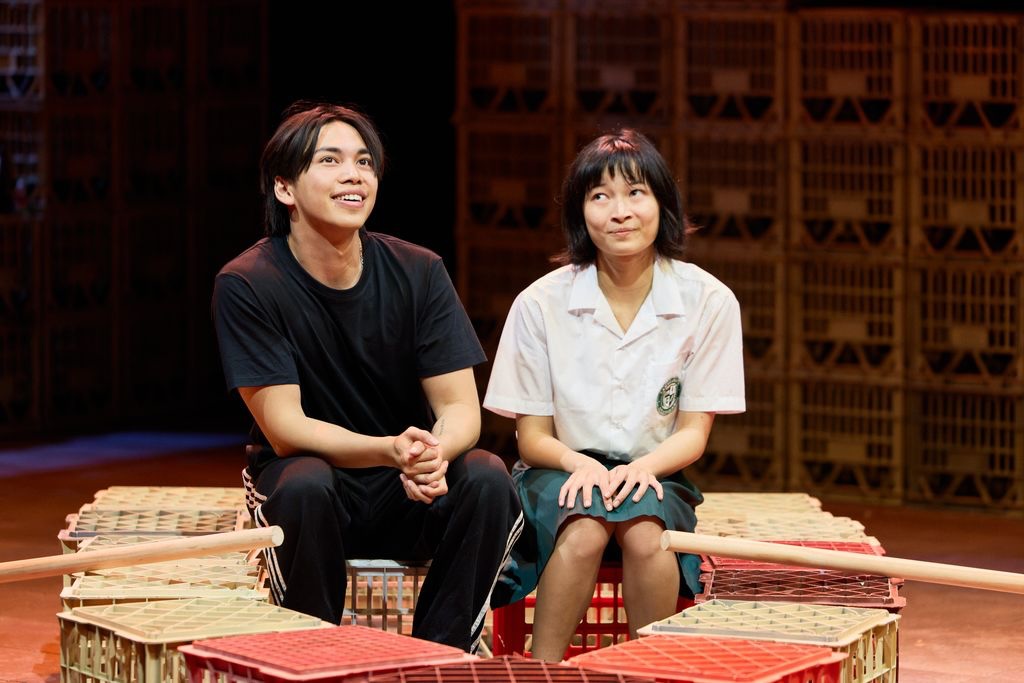
Thinking about that ending, another word about Ferguson’s set. Never have so many milkcrates been put to so much imaginative use. It’s quite special. Also credits to the lighting and sound (Phoebe Pilcher and Steve Francis, with Maggie Tra as composer), which change the mood as we are taken from interiors to exteriors.
In Pham’s words, this is an ‘anti-coming of age story. Terrible histories snake around our teenagers, forcing them to become adults. Memories that aren’t even theirs threaten to displace their present. They must find a way back to childhood, together.’ The Coconut Children, which she began writing when she was 16, is ‘for anyone who feels like they were robbed of their childhood and wants to see their childhood in a more magical way’.
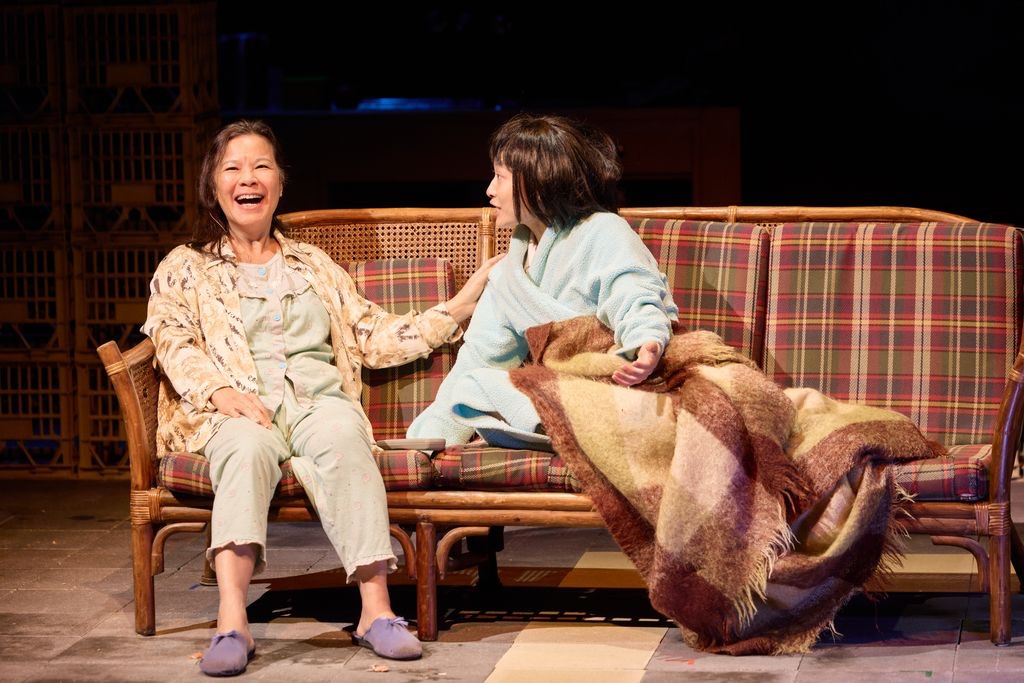
And I’m giving the last word to Doàn, as Sonny’s Grandma: ‘To know suffering but not to know pleasure is a waste of life, child.’
At Belvoir Street Upstairs until 20 December
Tickets: $56-$98 plus transaction fee
https://belvoir.com.au/productions/the-coconut-children/or (02) 9699 3444