Ensemble Q’s performance at Sydney Opera House offered a delightful sonic journey that combined energetic modern pieces with some of classical music’s best-known works.
Taking place in the intimate Utzon Room, the performance opened with Beethoven’s ‘String Trio No. 3 in C Minor’. Technically demanding due to Beethoven’s signature “storm and stress” style, the piece showcased the ensemble’s wide-ranging skillset. Particularly impressive was how the player’s navigated the difficultly abrupt dynamic changes, as well as the balance they achieved between the jagged cello pizzicato line with the soaring legato melodies of the upper strings. The ensemble’s deft performance of these contrasting elements effectively brough Beethoven’s genius to life, especially the way he pushed the boundaries of chamber music early in his career.
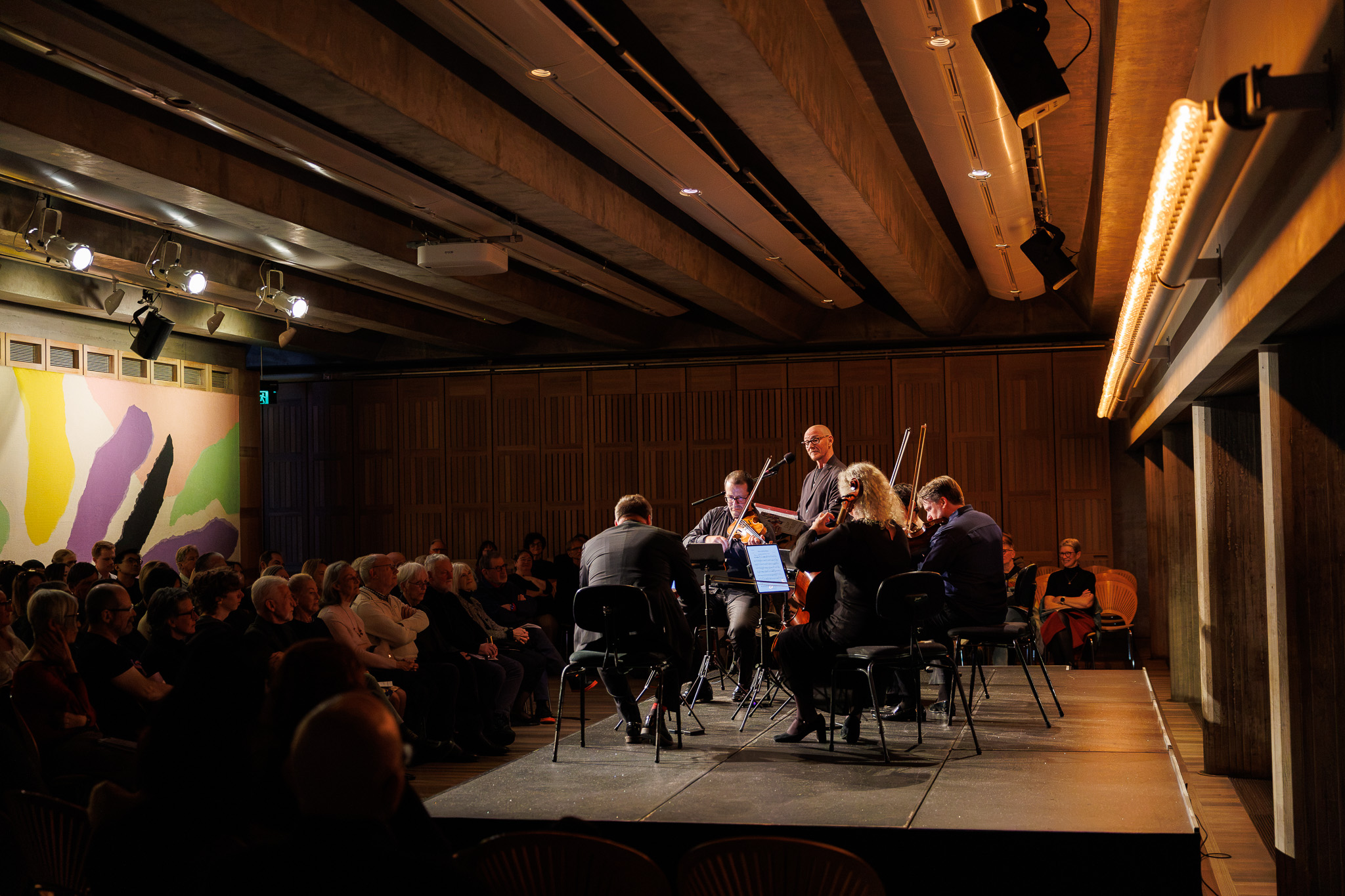
Photo: Gavin Rebetzke
A stark departure from Beethoven, the next piece ‘Sonam and the Silence’ took inspiration from writer and music educator Ed Le Brocq’s children’s book by the same name. Le Brocq’s live reading of the book was accompanied by Ensemble Q with music by Anne Cawrse. It told the story of Sonam, a young girl from Kabul who le Brocq met during his time teaching music in Afghanistan. While Sonam is fascinated by the power of music and longs to learn the loot-like instrument of the rubab, the Taliban’s harsh ban on music puts a stop to this dream. The musical accompaniment emphasised Sonam’s emotions at each point of Le Brocq’s book. When he describes the “storm” of the Kabul streets during peak-time, the strings and clarinet play swirling dissonant melodies. When he explains how Sonam is told she can no longer learn her beloved rubab, descending slurs are played by the clarinet and the strings sustain low, echoing notes. However, while the story brims with melancholy, there remains a childish whimsicality about the style of Le Brocq’s writing and Cawrse’s accompanying music. This whimsicality can be summarised by the metaphor that “music is like a pomegranate tree. It needs nurturing and love.”
Curly Pyjama Letters was a playful composition by Calvin Bowman that similarly took inspiration from a literary source. This time, it was cartoonist Leunig whose absurd collection of fictional letters provided the creative stimulus for Bowman’s piece. While Le Brocq read the letters with necessary verve and the music was suitably light-hearted, these elements combined did not create a feeling of completeness. The music felt too sparse and simple, while the Leunig excerpts would have only been understood by those who already possessed an intimate understanding of Leunig’s larger body of works as well as his characters.
Returning to familiar ground once again, ‘Mozart’s Clarinet Quintet in A’ provided the perfect end to the concert with a virtuosic clarinet performance by Paul Dean. The piece showcased the clarinet’s amber tones, especially in the second movement when Dean played a soulful, aria-like melody that felt akin to a sonic hug in the cosy space of the Utzon Room.
Ensemble Q took the audience from the world of classical chamber music to heartwarming and emotional narrative adventures. While this musical vastness certainly showcased the scope of the ensemble’s talents, at times it did create rather jarring stylistic shifts. I couldn’t help but wonder if a more cohesive program would have further elevated this performance.