

Photo: marco-bianchetti-vzFTmxTl0DQ-unsplash.jpg
With loneliness on the rise, people are paying strangers to cuddle them. But is it therapy, companionship, or something else entirely?
When a young man arrived for a cuddle session with Jerika, he could barely make eye contact. Fresh out of university, he had spent years focused on his studies, had little experience with women, and seemed uncomfortable with physical closeness.
Recently, he messaged Jerika, a Sydney-based professional cuddler. He told her he had been on his first date. Ever.
“He thanked me,” Jerica told me. “That warms my heart so much.”
This is not a story about sex work. It is a story about non-sexual cuddling and the growing number of Australians willing to pay to be cuddled.
Many are paying for platonic, non-sexual cuddles, and for many what they seek is neither sex nor therapy, but comfort, connection and calm.
A 2025 article republished by the Australian Psychological Society described Australia as facing a “loneliness epidemic,” with some people turning to professional cuddlers for human contact.
But the cuddling service remains controversial. It lacks formal regulation and evidence of its effectiveness is limited; its safety depends heavily on clear boundaries and consent.
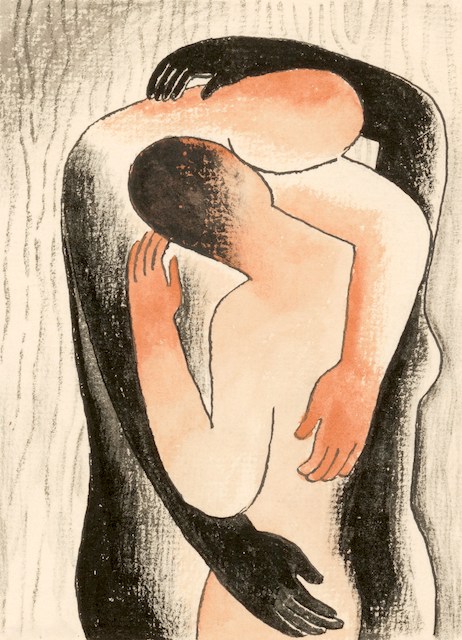
europeana-0H57QCuOJN0-unsplash copy.jpg
Jerika, 37, works as an in-house graphic designer by day. Cuddling is not her full-time job.
“I’ve always been kind of just wanting to help people, doing different things, to be of service,” she said.
Her clients come from very diverse backgrounds but often present with similar emotional problems. Many are “stressed out,” with “a lot of stuff going on in their lives”, and “just don’t have a way to connect with somebody.” Some, Jerica said, “simply have no one to hug.”
Dr Glen Hosking is a clinical psychologist and associate professor of psychology at La Trobe University.
In a story published in The Conversation, “Cuddle therapy” he wrote:”Cuddle therapists offer consensual, non-sexual cuddles in a structured and safe environment, designed to be free from criticism, bias, conflict and any behaviour or conversation that may feel unsafe or threatening.”
It sounds like what we all need right now. But will it actually help?
“The popularity of cuddle therapy may say as much about social conditions as it does about the service itself,” he told me when I contacted him for comment.
Dr Hosking said that rising loneliness, fewer opportunities for safe platonic touch, and the commodification of care were important contextual factors. In that sense, cuddle therapy can be seen less as a fringe practice and more as a symptom of wider gaps in how societies support connection and wellbeing.
He said cuddling can have risks, and they are not always physical.
“The most common boundary challenges tend to involve emotional intimacy rather than
overt sexual misconduct. Clear communication, ongoing consent checks, and firm role definitions are essential but not always easy to maintain in practice.”
Firm role definitions are matters Jerika is quick to establish. She asks clients to wear something comfortable and soft – shorts and a soft t-shirt. When they arrive at her home on Sydney’s Northern Beaches, she has music playing and a glass of water waiting. Then she walks them through the rules. “No kissing,” she explains. “Hands must stay outside of bikini zones. If they want to switch positions, they need to communicate – not just try to move me.”
And what about arousal? “If arousal happens, that’s totally normal and natural,” she says. “We just don’t do anything about it. I’m not going to shame them.”
She has never had to end a session. If a hand wanders, she moves it. If it happens again, she verbalises it. But so far, subtle boundary-setting has been enough.
“I can set boundaries in smaller, more subtle ways so it doesn’t disrupt the entire session,” she says. “But I definitely would if it came to it. I have no problem being like, ‘You need to leave now’.”
Jerika’s rules show how carefully practitioners try to keep sessions platonic, but clear rules do not eliminate every risk.
Jerika put me in contact with a young man who asked not to be named. He said he understands the scepticism.
“The physical closeness, particularly between a male and female cuddler could promote the wrong intentions,” he acknowledged. “I really just wanted the psychological relief it brings.”
Jerika has experienced this first-hand. “People think it’s a euphemism for something else,” she says.
She can tell which clients are genuinely there for a cuddle and which are testing for something more sexual. When boundaries are crossed, such as a hand moving too close or an unexpected kiss on the forehead, she responds calmly. She steps back and gives a verbal reminder. So far, she says, it has never escalated to the point of ending a session.
Should there be regulations to clearly set out what the boundaries are.
Dr Hosking had indicated he supports regulating professional cuddling. “Given the degree of physical closeness involved, I do think there is a strong case for some form of regulation or oversight,” he said. “Minimum standards around training, ethics, safeguarding, and complaints processes would help protect both clients and practitioners.”
Jerika does not agree. “If it were regulated there would be a higher bar of entry to the profession. Adding paperwork would just make it harder for us.”
These opposing views reflect a broader tension within the industry. The service depends on informality and accessibility, yet those same qualities can leave clients and practitioners without clear standards when issues arise.
So, what does a paid cuddle deliver?
For Jerika’s young client the cuddle was personal and immediate. “The aspects of being embraced by someone or embracing them fulfil a hard-to-describe inner need,” he said. “For me, holding hands and cuddling feels like someone telling me everything is going to be ok. It takes the pressure off.”
His experience points to something greater than individual comfort. It suggests that the allure of professional cuddling lies in its ability to distinguish intimacy from conventional expectations such as romance, performance, duty, or sexual motives. What is being purchased is not just contact but a deliberately limited closeness that has become surprisingly rare in everyday life.
But that does not make cuddle services a substitute for therapy. Dr Hosking said there was “relatively little rigorous empirical research specifically evaluating cuddle therapy as a distinct intervention” and claims about its efficacy “should remain cautious.”
Jerika has always been clear about this. “I don’t pretend to be a therapist,” she said. “I don’t guarantee life-changing results. I’m just providing something for an hour.”
Perhaps that is enough. Or perhaps the real question is not whether cuddle therapy works, but why, in one of the wealthiest countries in the world, so many people feel the need for it.