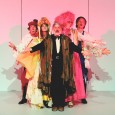
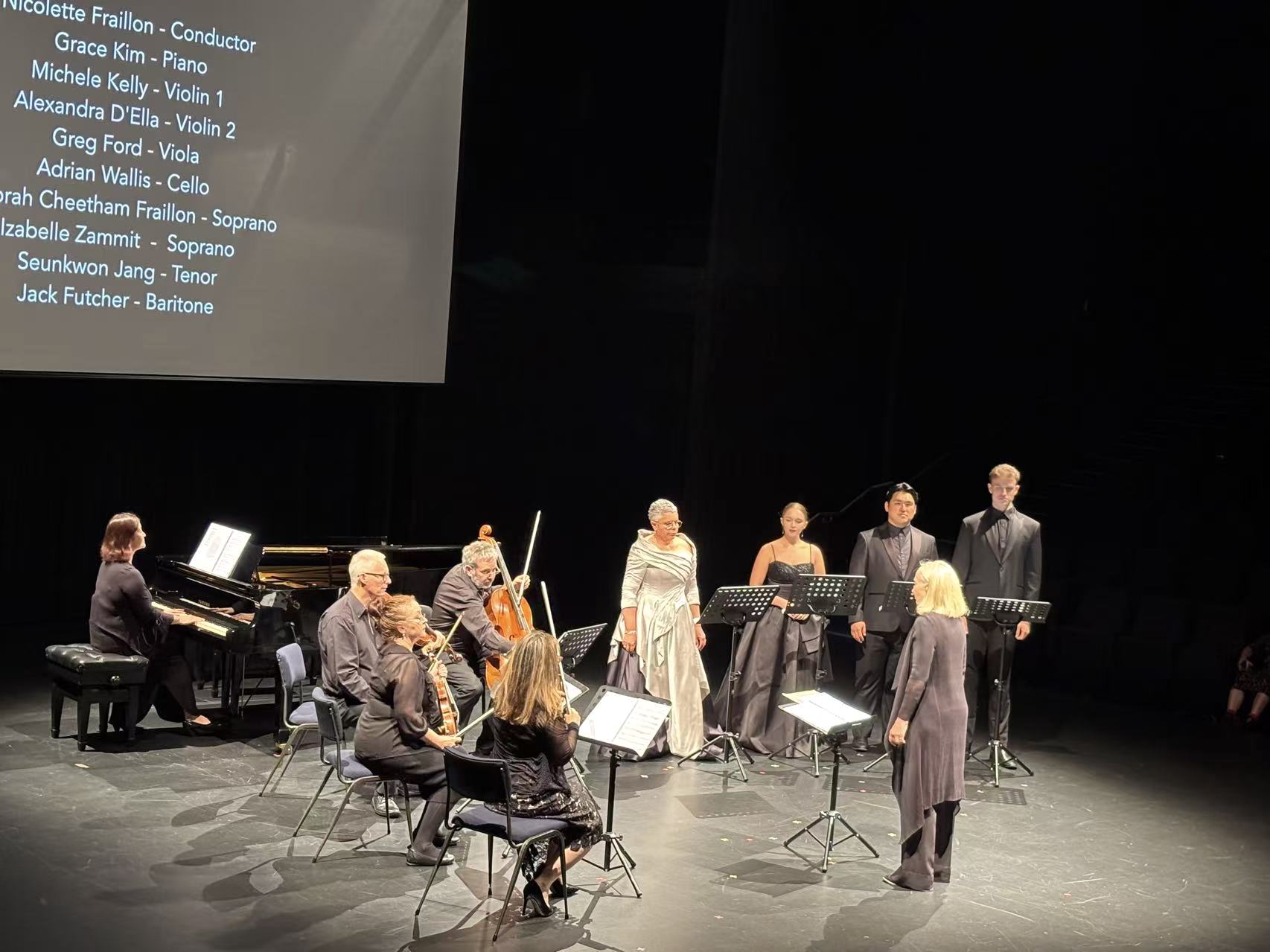
WOVEN SONG, a contemporary work created and performed by Yorta Yorta soprano Deborah Cheetham Fraillon. Photo: Leona Li
On November 21, the 50th anniversary of the Seymour Centre, Sydney audiences were treated to a special chamber music performance: WOVEN SONG, a contemporary work created and performed by Yorta Yorta soprano Deborah Cheetham Fraillon.
The title WOVEN SONG is also the source of Deborah Cheetham Fraillon’s creative inspiration. The word “woven” refers to the Embassy Tapestries, a project that began in 2004 as a collaboration between Indigenous artists and the master weavers at the Australian Tapestry Workshop (ATW). This project, which displays works of art created by First Nations people of Australia, draws on more than 60,000 years of culture, reinterpreted and recreated by exceptional weavers and displayed in many different countries.
Through her musical composition, Deborah Cheetham Fraillon breathes new life into each work, allowing people to enjoy these beautiful artworks in a new artistic form. At the live performance of WOVEN SONG, audiences had the chance to hear music that was composed from her deep love for, and emotional connection to, Indigenous culture and people.
Because of the stories behind the music, the performance was also presented in a very vivid way. Throughout the two-hour performance, before each piece, audiences were introduced to the background of the work by Deborah Cheetham Fraillon herself or recorded video, along with projected images of the original artwork and the tapestry. Undoubtedly, apart from the music, the stories she shared were the most arresting part of the performance.
As a member of the Stolen Generations, Deborah Cheetham Fraillon was not able to grow up with her Aboriginal family. Before the third piece of the evening, “Gulaga”, she shared one of the stories behind the work. She spoke about a recurring dream she had been having since she was 15 years old. In the dream, there is a mountain that sweeps down towards the sea. Many years later, after she reconnected with her Aboriginal family, she travelled to her grandfather’s homeland.
There, she finally saw the mountain that had appeared in her dreams for 35 years: Gulaga, the mountain that gives the song its name.
“I didn’t see the mountain, but she saw me,” Deborah Cheetham Fraillon said, before she performed the piece.
Moments like this appeared many times throughout the evening. These honest, open stories, full of the composer’s own reflections, experiences and even dreams, not only gave Deborah Cheetham Fraillon’s music a strong sense of imagery but also brought audiences closer to both the performer and the music itself, making the whole performance feel intimate.
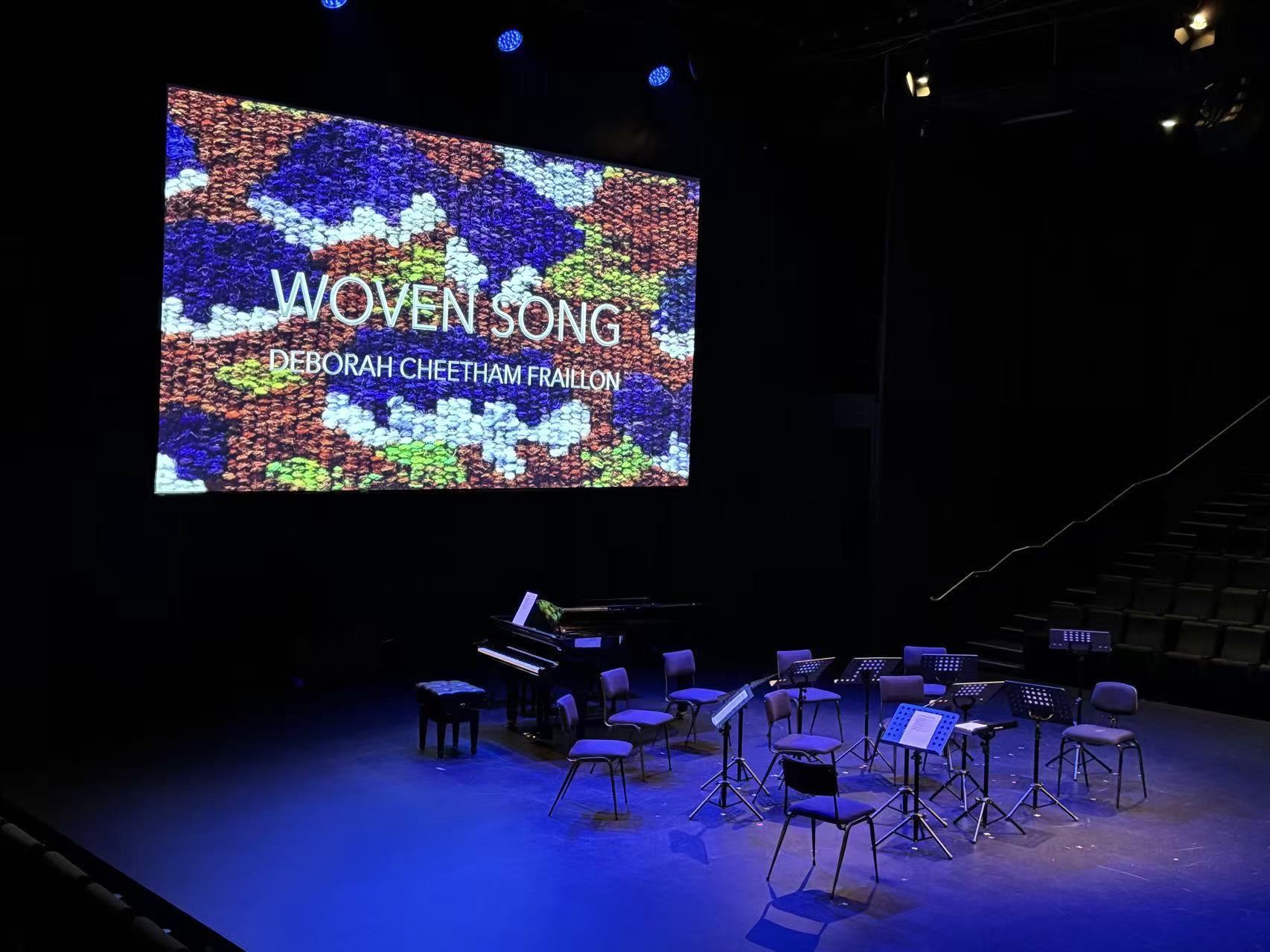
By using the story-sharing moments efficiently, Deborah Cheetham Fraillon was also able to change into different gowns that matched each artwork. Every gown was beautifully designed, and each time she appeared in a new one, it drew warm applause from the audience.
Meanwhile, when it comes to the music itself, the way Deborah Cheetham Fraillon wrote it gave audiences a refreshing new feeling. Building on the more traditional chamber set-up of strings, piano and wind instruments, the music placed extra emphasis on the woodwinds and on the instrument performed by Cinzia Posega. This made the overall sound lyrical yet playful, and it easily led listeners to imagine valleys, rivers and other natural landscapes.
Even more surprising was that, in addition to the instruments commonly used in Western symphonic music, the performance also featured the Chinese traditional instrument Guzheng and the Japanese Shakuhachi, giving the whole sound a powerful sense of cross-cultural energy.
This creativity also extended into the writing of the lyrics. Instead of using a single language, Deborah Cheetham Fraillon wove a variety of First Nations languages into the text. For example, the songs “Pukumani” and “Ngarrgooroon” both include First Nations languages in the lyrics. However, the one small drawback is that, because many in the audience were unfamiliar with these languages, it did make it harder for them to fully understand the songs.
Overall though, WOVEN SONG offered listeners a rare chance to engage with Aboriginal culture from many angles and perspectives. Especially on the occasion of the 50th anniversary of the Seymour Centre, the final scene when all the performers and the audience joined together to sing “Happy Birthday” deepened the connection between audience, artists and venue. And it gave the audience this precious chance to participate in creating this emotionally and innovative musical celebration with the performers.