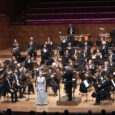
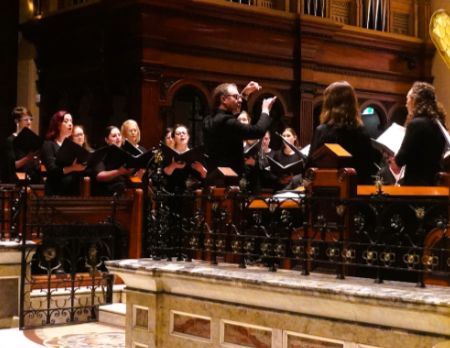
 Eager music goers gathered at the Walsh Bay Arts Precinct last weekend to revel in the rich sounds of the Baroque era with Gloria! by Sydney Philharmonia Choirs. With champagne in hand and Sydney Harbour shimmering in the background, audiences were treated to an afternoon that was as visually striking as it was musically engaging. On a humid Saturday afternoon, the choir presented a program that proved a delight for the senses.
Founded in 1920, Sydney Philharmonia Choirs has long been at the centre of choral performance at the Sydney Opera House. Today, the organisation brings together more than 2,000 singers across six ensembles, presenting around fifty performances each year throughout Sydney and beyond. Gloria! opened the choir’s 2026 season. Under the direction of Brett Weymark, the choir and orchestra performed three Baroque masterpieces in a two-hour program that evoked the churches and concert halls of eighteenth-century Europe.
The concert opened with Antonio Vivaldi’s Gloria in D major, one of the composer’s most celebrated sacred works. Written during his time at the L’Ospedale della Pietà in Venice, the piece immediately set the tone for the afternoon’s exploration of Baroque brilliance. From the triumphant opening chorus, the ensemble displayed impressive musicality. The choir sang with crisp articulation and strong dynamic contrast, while the orchestra provided lively support. Period instruments, including harpsichord, Baroque oboe, and trumpets, added an appealing sense of historical verisimilitude.
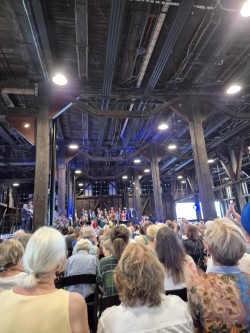 The program continued with Johann Sebastian Bach’s cantata Weinen, Klagen, Sorgen, Zagen. First performed in Leipzig in the 1720s, the work gradually moves from a sense of lamentation to spiritual reassurance. The choir navigated Bach’s intricate musical notations with confidence. However, the performance space at Walsh Bay Arts Precinct occasionally posed challenges. While the converted wharf provides a striking waterfront setting, its acoustics sometimes softened the full richness of the choir. The ambient sounds of the harbour, including passing boats and overhead helicopters, also made complete immersion into the eighteenth-century music difficult at times. Yet, the juxtaposition of Baroque music within this contemporary industrial venue also served as a reminder of the genre’s enduring appeal.
The final work, George Frideric Handel’s Dixit Dominus, brought a return to the exuberance of the Baroque period. Written when Handel was just 22-years-old, the piece already reveals the dramatic flair that would later define his career. The work gave prominence to the soloists, whose operatic intensity added colour and vitality to the performance. Their duets created lively exchanges between voice and orchestra, and attentive listeners could detect hints of Handel’s later masterpiece, Messiah. The piece concluded with a powerful final chorus, bringing choir and soloists together in an impressive display of musical unity.
Overall, Gloria! offered an engaging journey through the textures and emotions of the Baroque period. Across three contrasting works, the program moved between grandeur, reflection, and celebration. As the opening concert of the 2026 season, the performance set an uplifting tone for the year ahead.
Sydney Philharmonia Choirs performed Gloria! at the Walsh Bay Arts Precinct in Sydney on 7 March 2026.