Spring heralds a celebratory time, blossoming with new beginnings and hope. Likewise, Bach Akademie Australia’s performance of JS Bach’s Brandenburg Concertos at The Brandenburg Concertos on Saturday November 15 on the Pier is a joyous tribute that opens up the breath of Bach’s most famous works.
The Brandenburg Concertos were originally compiled in 1721 for the Margrave Christian Ludwig of Brandenburg-Schwedt to showcase the diverse range of musical instruments, from horns to oboes, bassoon, trumpet, flute and recorders, and a Baroque violin piccolo. However, they were not discovered until 100 years after Bach’s death. To think that we nearly didn’t get to hear these masterpieces if not for the accidental discovery is unfathomable.
Artistic Director, Madeleine Easton led 20 musicians in a passionate 2-hour performance of all six Brandenburg Concertos in the intimate setting of ACO on the Pier, its new home in Dawes Point.
What’s great about this performance is that Madelaine takes the time to give the audience an adequate background of the Brandeburg Concertos, not only about its history but her own passionate and numerous response to its composition, structure and tempo, giving you a greater appreciation of Bach’s talent.
The performance started with Concerto No.1 in F major, BWV 1046 with its sunny notes featuring oboes and bassoon, a perfect start to warm up the audience, much like seeds germinating in a spring garden.
Concerto No 2 in F major, BMV 1047 is a technically more difficult piece, particularly for the trumpeter Richard Fomison, who had to navigate the right combination of the instrument, lips, ears, breath and imagination. It’s like seedlings adapting to its environment.

Photo: Keith Saunders
But perhaps the most popular piece was Concerto No. 3 in G major, BWV 1048, with its distinctive feature of three violins, three violas and three cellos. It’s a joyous and triumphant piece filled with contrasting rhythms of fast tempos and languid movements, reminiscent of a blossoming garden filled with different colours, textures and fragrance. This piece really resonated with the audience who applauded continuously at the end.
Concerto No. 4 in G major, BWV 1049 features the more subtle sounds of flutes and recorder that resembles birds and bees in flight, darting from one blossom to another pollinating in nature’s quiet rhythm, a welcome contrast to the more robust Concerto No. 3.
Concerto No. 5 in D major, BWV 1050, is a showcase of the harpsichord, an instrument rarely heard these days but a delightful sound that is the hallmark of chamber music.
Neal Peres Da Costa interprets this piece with great gusto, with its fast fingering over the compact keyboard resembling the rapid growth spurt of a well-watered garden.
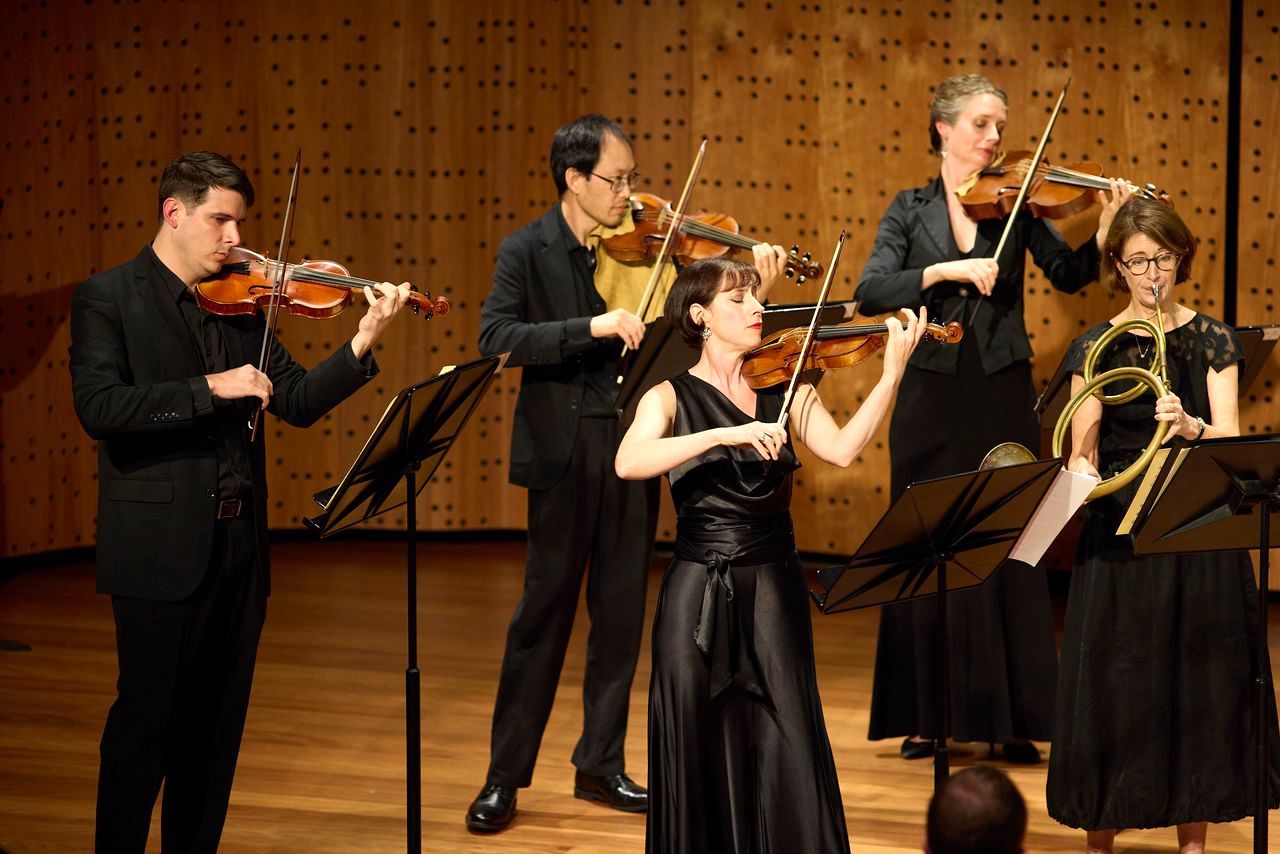
Photo: Keith Saunders
A fitting end to the performance is Concerto No. 6 in B flat major, BWV 1051, with its combination of violas and cellos making the tone softer and slowing down the rhythm, much like the garden resting in the cooler temperatures of a spring night.
With the Brandenberg Concertos, Back Akademie has managed to not only take the audience through the breadth of the technicalities of different musical instruments but also through the varying sounds and textures of its harmonious compositions.
For more information, visit https://www.bachakademieaustralia.com.au/events