It is always a challenge to say something new about our favourite piano classics. No matter how brilliant they may be, musicians who choose to perform pieces from this repertoire run the risk of leaving the audience uninspired.
But this couldn’t be further from the truth for celebrated Polish pianist Piotr Anderszewski. In his performance at Sydney’s City Recital Hall, Anderszewski managed to breathe fresh life into works by Brahms, Bach and Beethoven.
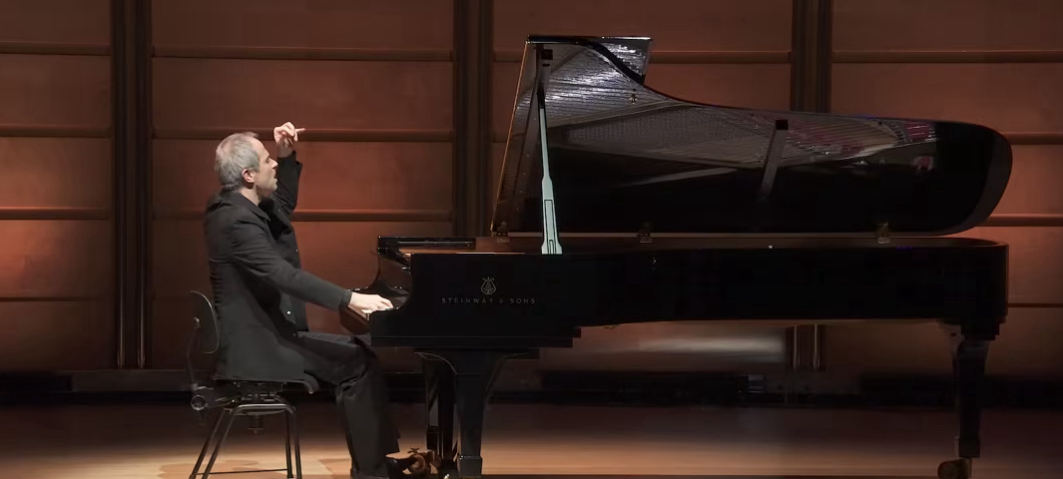
Piotr Anderszewski performs at the City Recital Hall.
Anderszewski opened with a collection of twelve short pieces by Brahms. Placing these miniature studies side by side was a unique arrangement that allowed the audience to experience the full scale of the composer’s genius, especially in the final years of his life. What was most breathtaking about this performance was Anderszewski’s ability to carry the audience seamlessly between different moods. For example, the dramatically melancholic movements from Brahms’s 1892 Seven Fantasies was contrasted against the more dreamy, almost improvised style of the Three Intermezzi. Andersewski’s technical ability was also not lost on the audience. Whether it was his sweeping chordal climaxes, intricate contrary-motion melodies or meditative legato, every moment contained a jewel of artistic musicality that left the audience wanting more.
The two short Bach preludes and fugues was the perfect example of Anderszewski’s repertory boldness. While Bach’s Well-Tempered Clavier may be associated more with young music students than international concert pianists, there was something miraculously refreshing about hearing these pieces played with exquisite technical and artistic ability. The preludes were especially beautiful, with each voice part perfectly balanced and clear. Anderszewski also played with a touch of light robato, which added a more expressive sound to the traditionally precise rhythmic values of these pieces. Though some Baroque purists may frown on this choice, it certainly gave Bach’s compositions momentum to delight and surprise a modern audience.
Beethoven’s much-loved Sonata in A-flat major was the perfect finale for an evening focused on the evolution of 20th-century pianism. The four movements of this sonata represent some of Beethoven’s most lyrical and introspective composition. This is especially obvious in the opening Moderato, in which sustained trills and winding melody lines create an almost lullaby quality. The final Fuga, which links back to the Bach fugues heard earlier, enters into a more intense register based on a pattern of rising fourths above an almost continuous chordal bass. These rising melodies and rumbling bass lay the ground for a superbly uplifting conclusion where all tension is resolved through a perfect cadence.
Piotr Anderszewski’s performance may have drawn from the classic piano cannon, but the audience certainly did not leave feeling as if they’d heard nothing new. Through artistic talent and superb technical prowess, Anderszewski transformed these pieces into a refreshingly unique experience.
Piotr Anderszewski will perform in Brisbane, Canberra, Melbourne and Newcastle. Check Musica Viva for dates.