A British film festival wouldn’t be complete without at least one cinematic period drama. Bringing little-known histories to light with visual beauty, attention to detail and exaggerated emotional heart seems to be a common theme among England’s most critically acclaimed films. Think Chariots of Fire, The Kings Speech, or more recently, The Dig.
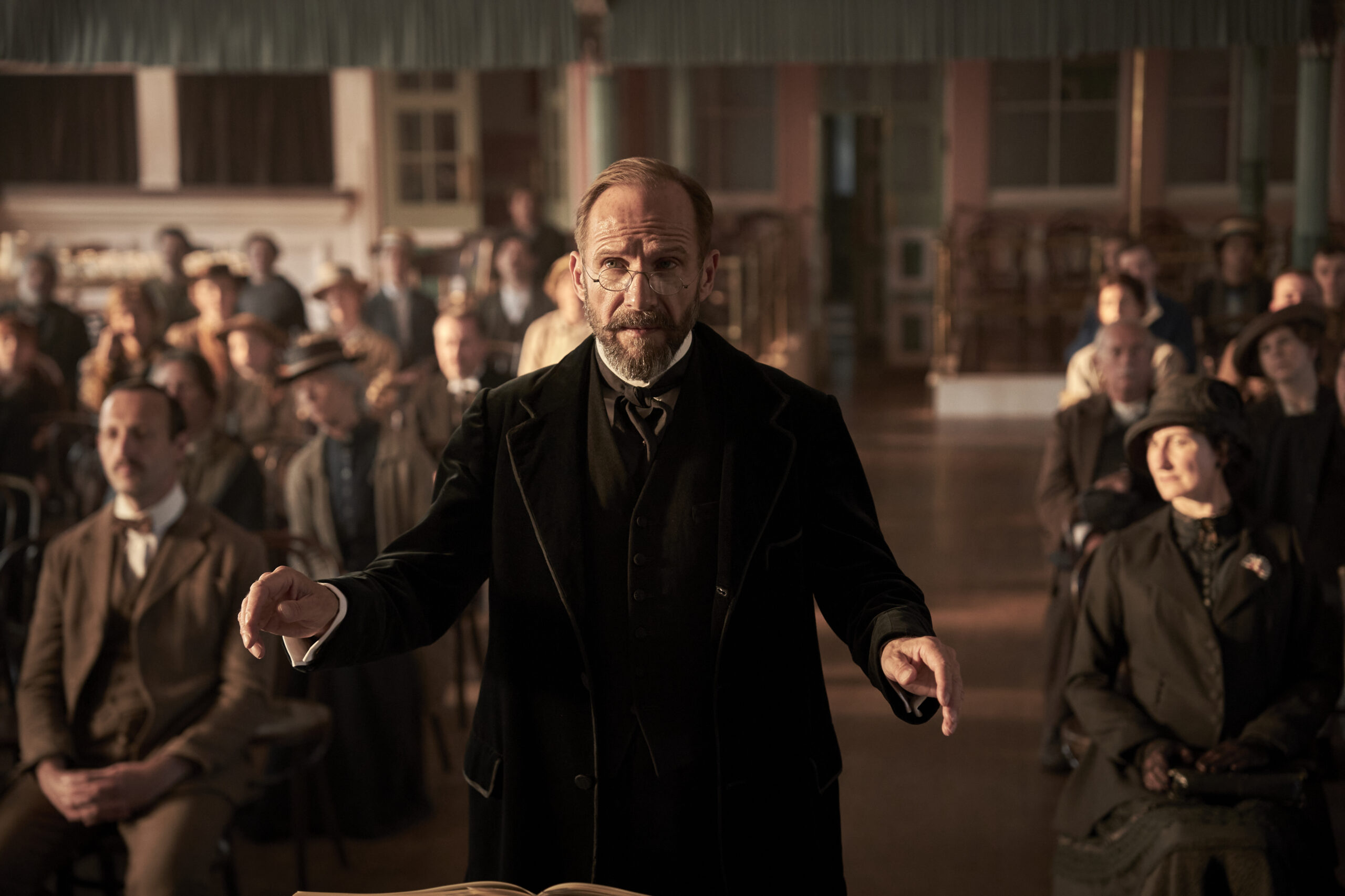
Ralph Fiennes in The Choral (2025)
It is fitting, then, that this year’s Russell Hobbs British Film Festival should open with Nicholas Hytner’s The Choral. In theory, Hytner’s film contains all the necessary ingredients to join its predecessors in the great tradition of period classics. Set in the breathtakingly pastoral Yorkshire countryside in 1916, The Choral, written by Alan Bennett, follows the members of the local church choir as they prepare to perform Edgar’s The Dream of Gerontius amidst the unrest of World War I. With most of the choir’s young male members at war and the remaining boys set to be conscripted, the group turns to the mysterious Dr. Guthrie (Ralph Fiennes) for direction.
But despite the empathic potential of the plot, the majority of the film is flat and almost awkward. And even its supporting cast of established British actors, including Roger Allam and Alun Armstrong to name just a few, can’t save the characters from feeling two-dimensional.
There are several moments that should have brought the audience to tears. For instance, when young serviceman Clyde (Jacob Dudman) returns from the front having lost his arm, he joins the choir at the urging of his friends. Here, he learns he has a miraculously angelic voice that makes him perfect for the leading role of Gerontius in the upcoming performance. In his time of intense suffering, music brings Clyde inner peace and a sense of purpose.
Yet, this powerful revelation, as well as his trauma, is quickly brushed over in the film, which instead opts for long panning shots of rolling hills and shimmering lakes. Beautiful as this scene is, it leaves Clyde’s experiences at the front and their enduring impact on him to the imagination, distancing him from the audience so they are unable to touch the full emotional world of his character.
Fiennes’s performance as the prickly music professor Dr. Guthrie is, at times, formidable. When he conducts the choir in the final performance, we do feel Guthrie’s experience of awe and passion, as well as the power of the human voice to convey undefinable emotions. But, like Clyde, his character feels just out of reach for the audience. While he expresses profound ideas, such as the unifying magic of music or the absurdity of war, these are conveyed like didactic statements without true heart.
The Choral brings to light a true story of war-time resilience, creativity and the power of music to buoy us in difficult times. While the film does have its moments of superb acting, these are ultimately too few and far between to make up for its lack of emotional depth.
The Choral is now showing at Palace Cinemas until December 7 2025.